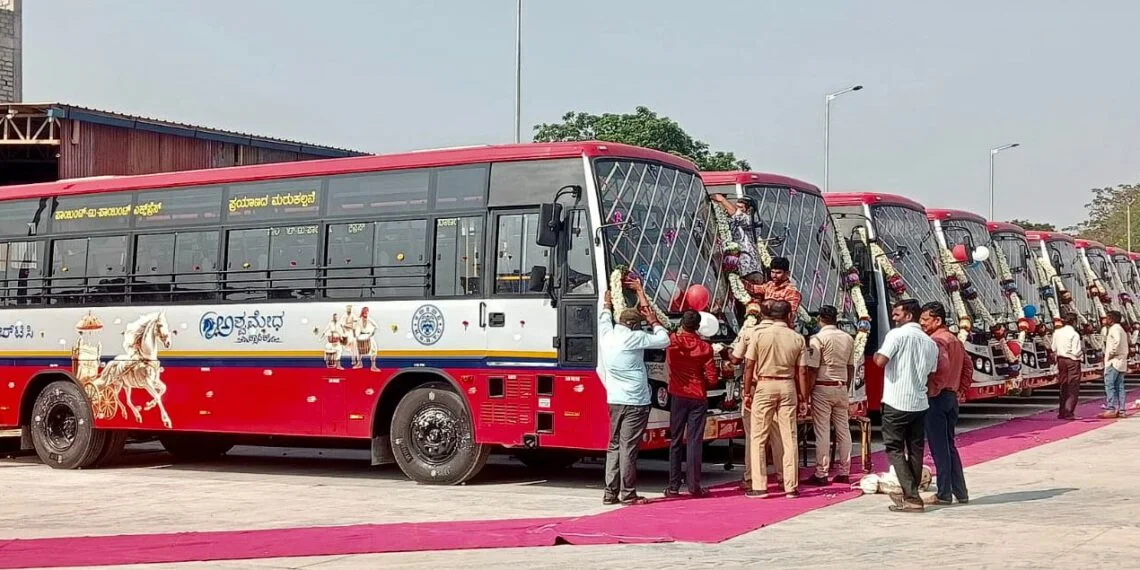
Bengaluru: Karnataka’s four state-run transport corporations have sought government approval for a substantial increase in bus fares, citing a sharp rise in diesel prices and mounting financial liabilities.
In a representation submitted to the state government, the Karnataka State Road Transport Corporation, Bangalore Metropolitan Transport Corporation, North Western Karnataka Road Transport Corporation and Kalyana Karnataka Road Transport Corporation have requested a fare revision of at least 25%.
According to the corporations, the recent increase in diesel prices by around ₹8 per litre has resulted in an additional financial burden of nearly ₹40 crore every month, translating into an annual impact of about ₹480 crore.
Transport officials have argued that the fare hike has become necessary as the corporations continue to grapple with multiple financial challenges. A 12.5% salary increase for transport employees is scheduled to come into effect from July, while salary arrears amounting to ₹821 crore out of a total liability of ₹1,271 crore remain unpaid.
Officials also pointed to pending reimbursements of nearly ₹5,000 crore from the state government under the Congress government’s flagship Shakti scheme, which provides free bus travel for women across the state. The delay in receiving these funds has further strained the finances of the transport undertakings, they said.
The corporations maintained that without a revision in fares, sustaining operations and meeting employee-related commitments would become increasingly difficult.
However, the proposal has drawn opposition from passengers, many of whom pointed out that bus fares were increased by 15% only last year. Commuters have argued that another hike within a short span would place an additional burden on the public, particularly daily wage earners, students and lower-income families.
Some passengers suggested that the government explore alternative measures, including partial fare collection from beneficiaries of the Shakti scheme or faster reimbursement of subsidy amounts to transport corporations, instead of passing the burden entirely on commuters.