New Delhi: A total of 332 sanitation workers lost their lives while undertaking hazardous cleaning of sewers and septic tanks across 18 States and Union Territories between January 1, 2021, and June 30, 2026, the Centre informed the Lok Sabha on Tuesday.
In a written reply, Minister of State for Social Justice and Empowerment Ramdas Athawale said the government remains committed to the complete eradication of manual scavenging through strict enforcement of the Prohibition of Employment as Manual Scavengers and their Rehabilitation Act, 2013, rehabilitation measures and the promotion of mechanised sanitation systems.
The Minister said the Act prohibits the employment or engagement of manual scavengers and prescribes punishment of up to two years’ imprisonment, a fine of up to ₹1 lakh, or both for individuals or agencies found violating its provisions.
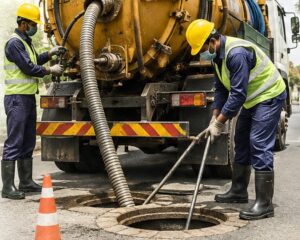
According to information received from the National Commission for Safai Karamcharis (NCSK), the 332 deaths occurred during hazardous sewer and septic tank cleaning operations over the five-and-a-half-year period.
The Centre also informed Parliament that 193 First Information Reports (FIRs) have been registered over the past five years by States and Union Territories against agencies and officials responsible for hazardous manual cleaning, in accordance with the law.
Responding to a supplementary question, the government said no separate evaluation has been undertaken to assess the implementation of mechanised sewer cleaning across States and Union Territories.
The Minister further stated that recent district-level surveys have not reported any instance of manual scavenging, which the government said reflects the impact of sustained legislative, administrative and rehabilitation measures. It added that efforts would continue to focus on worker safety, mechanisation of sanitation services and the rehabilitation of affected persons with the objective of achieving a manual scavenging-free India.