Bengaluru: Karnataka Health Minister UT Khader has welcomed the Supreme Court’s observations on the high prices of life-saving medicines, particularly cancer drugs, and said the state government’s investigation into inflated pricing helped bring the issue to the attention of the Union government.
Khader said complaints about exorbitant prices of essential cancer medicines had prompted him to direct the Drugs Control Division of the Health and Family Welfare Department to conduct a statewide inquiry.
The investigation found a significant gap between the landing cost and maximum retail price (MRP) of 253 cancer medicines. According to the minister, medicines costing a few hundred rupees were being sold with trade margins ranging from 15% to 52%, and sometimes higher.
On the direction of Chief Minister D.K. Shivakumar, the state government submitted detailed cost and pricing data to the Union government and sought urgent action.
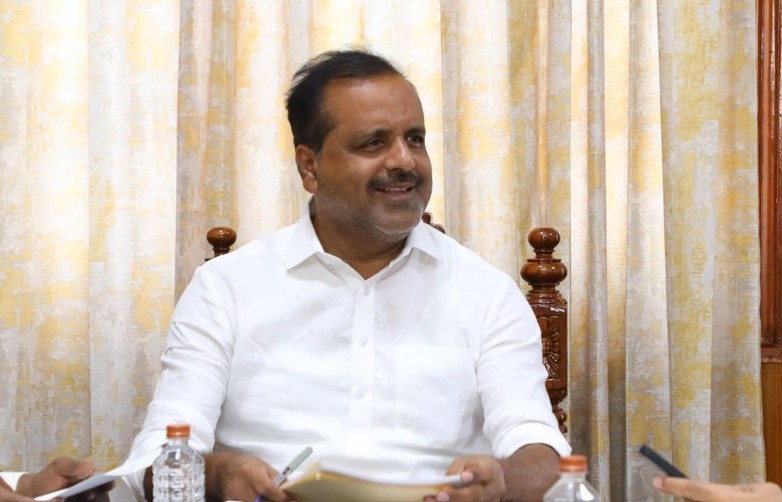
Khader said the National Pharmaceutical Pricing Authority (NPPA) had now capped trade margins on cancer medicines at 30%. The move is expected to reduce the prices of several drugs by 20–70% and save patients across the country nearly ₹2,500 crore annually.
New pricing transparency measures from November 1
The minister announced that, from November 1, 2026, hospitals and pharmacies in Karnataka would be required to display both the landing cost and MRP on every patient bill.
The state government will also examine medicine and treatment costs for heart and kidney diseases. Investigations and strict action will follow wherever patients are found to be exploited, he said.
Khader added that inspections of hospitals and medical shops would continue to ensure compliance with the revised price limits, with legal action against violations.
He congratulated the Health and Family Welfare Department’s principal secretary, the Commissioner of Food Safety and Drug Administration, and the officials involved in the investigation. He also acknowledged the media’s role in highlighting the issue.
“Cancer patients must not be forced to fight both the disease and the burden of unaffordable medicines,” Khader said, asserting that the government would not tolerate the exploitation of patients.