Bengaluru: The Karnataka government is considering a comprehensive legal framework to regulate spas, massage centres, unisex salons, beauty parlours and gymnasiums across the state following recommendations made by the Karnataka Law Commission.
The move comes in response to a representation submitted by Mangaluru-based former government advocate Manoraj Rajeeva, who had urged the state to introduce a licensing system and stricter regulations for such establishments.
In its 76th Report dated February 3, 2026, the Law Commission recommended amendments to existing municipal laws and proposed a detailed set of model bye-laws governing the establishment and operation of spas, massage centres, beauty parlours and related businesses.
The Commission noted that no Indian state currently has a dedicated law regulating massage centres. It referred to a 2014 Madras High Court judgment that examined regulatory frameworks in countries such as Singapore, the United States and the Philippines, and highlighted the need for legislation to safeguard public order, decency and morality while promoting legitimate wellness services.
Among the key recommendations is the inclusion of Ayurvedic health centres, spas, unisex salons, beauty parlours and gymnasiums under the licensing provisions of the Greater Bengaluru Governance Act, 2024. The Commission has also proposed provisions empowering authorities to impose penalties of up to Rs 10,000 and cancel licences in cases of repeated violations.
The draft bye-laws prescribe stringent conditions for obtaining and retaining licences. These include mandatory police verification of owners and managers, installation of CCTV cameras in entrances and common areas, maintenance of customer identification records, separate facilities for men and women, and restrictions on operating hours between 9 am and 9 pm.
The proposed rules also prohibit any form of sexual activity within spa premises and require therapists to possess recognised qualifications in physiotherapy, acupressure or occupational therapy. Establishments with more than 10 employees would be required to constitute Internal Complaints Committees under workplace sexual harassment laws.
According to the Law Commission, proper regulation would not only curb illegal activities but also help professionalise the wellness industry, create employment opportunities for trained healthcare and alternative medicine practitioners, and remove the stigma often associated with massage and spa services.
Regulating the wellness sector:
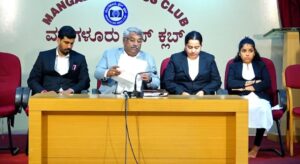
Manoraj Rajeev said frequent police raids on spa and massage centres in the state have raised concerns in the absence of a specific law regulating the sector. He argued that without a clear legal framework defining permissible and prohibited activities, questions remain over the basis for such enforcement actions. Addressing a press conference in Mangaluru on Aug. 21, 2025, along with advocates Shishir Bhandari, Roshani Sorab and Nadini Akhil, he urged the Karnataka government to enact legislation similar to that in Kerala, where Ayurvedic, massage, spa and hair-care centres operate under a licensing and regulatory framework. He said a similar law in Karnataka would help regulate the sector and bring greater clarity and accountability.